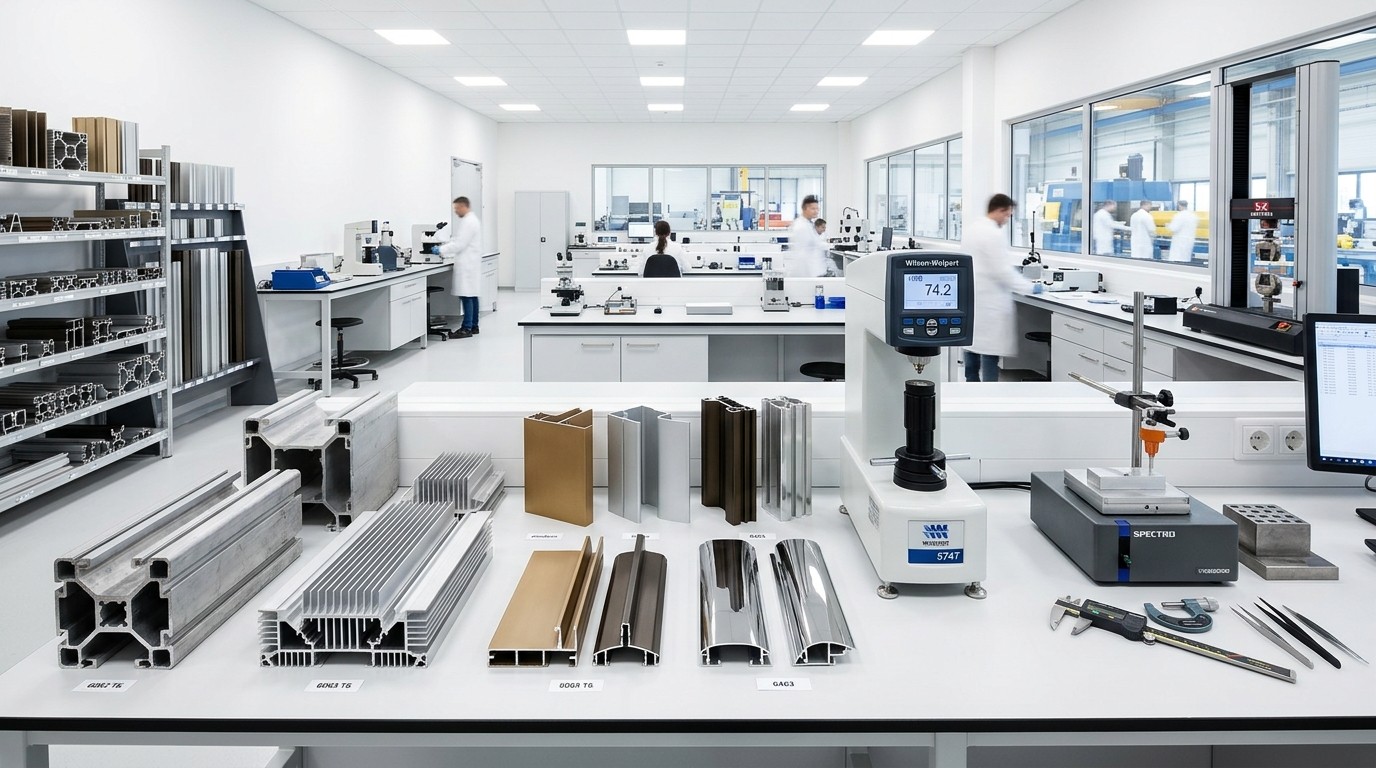
Alloy and temper selection (5000, 6000 & 7000 series)
5000 series (5083, 5754) excels in marine corrosion resistance, 6000 series (6060, 6063, 6005A, 6082, 6463) in architectural and structural sections, and 7000 series (7020, 7075) in defense and ultra-high-strength applications.
Comparing 6xxx Series Extrusion Alloys and T5 / T6 / T66 Tempers
Alloy selection balances strength, corrosion resistance, surface appearance, and machinability. 6060 and 6063 deliver excellent surface quality, while 5083 and 5754 provide superior resistance to seawater and chemical exposure.
6005A and 6082 are chosen for load-bearing structures, whereas 7020 and 7075 serve defense industry, automotive, and high-stress components. Where a bright anodized finish is required, low-iron 6463 stands out.
Profiles are extruded using either PREMIUM (primary) or certified Secondary billet in H112, T5, T6, and T66 tempers, with mechanical properties verified by wall thickness class under EN 755-2.
| Alloy / Temper | Typical Tensile Rm (MPa) | Typical Yield Rp0.2 (MPa) | Extrudability & Surface Finish | Primary Engineering Application |
|---|---|---|---|---|
| EN AW-6060 T5 / T66 | ≥ 160 – 215 MPa | ≥ 120 – 160 MPa | Very High / Premium Anodizing | Intricate thin-wall architectural & lighting profiles |
| EN AW-6063 T5 / T6 | ≥ 175 – 215 MPa | ≥ 130 – 170 MPa | High / Excellent Anodizing & RAL | Curtain walls, windows, heat sinks, furniture |
| EN AW-6005A T6 | ≥ 255 – 270 MPa | ≥ 215 – 225 MPa | Medium-High / Good Structural Finish | Solar PV rails, transport bodies, conveyor beams |
| EN AW-6082 T6 | ≥ 290 – 310 MPa | ≥ 250 – 260 MPa | Medium / Superior CNC Machinability | Heavy structural frames, automotive & machinery |
| EN AW-6463 T5 / T6 | ≥ 150 – 185 MPa | ≥ 110 – 160 MPa | High / Mirror Specular Gloss (E3) | Bright-polished anodized shower & decorative trim |
FAQ
What is the practical difference between EN AW-6063 and EN AW-6082?
EN AW-6063 excels in thin walls and decorative anodizing (Rm ≥ 175–215 MPa), whereas EN AW-6082 T6 delivers structural tensile strength (Rm ≥ 290–310 MPa) and short-chip CNC machinability.
How do T5, T6 and T66 tempers differ per EN 515?
T5 is press-cooled and artificially aged; T6 is solution heat-treated and aged for peak strength; T66 achieves enhanced mechanical properties above standard T6 via controlled press quenching.
Related Engineering & Manufacturing Resources

5000, 6000 & 7000 Series Alloys (EN 573-3 / EN 755-2)
Chemical composition and mechanical property tables for EN AW-5083, 5754, 6060, 6063, 6005A, 6082, 6463, 7020 and 7075.
Read more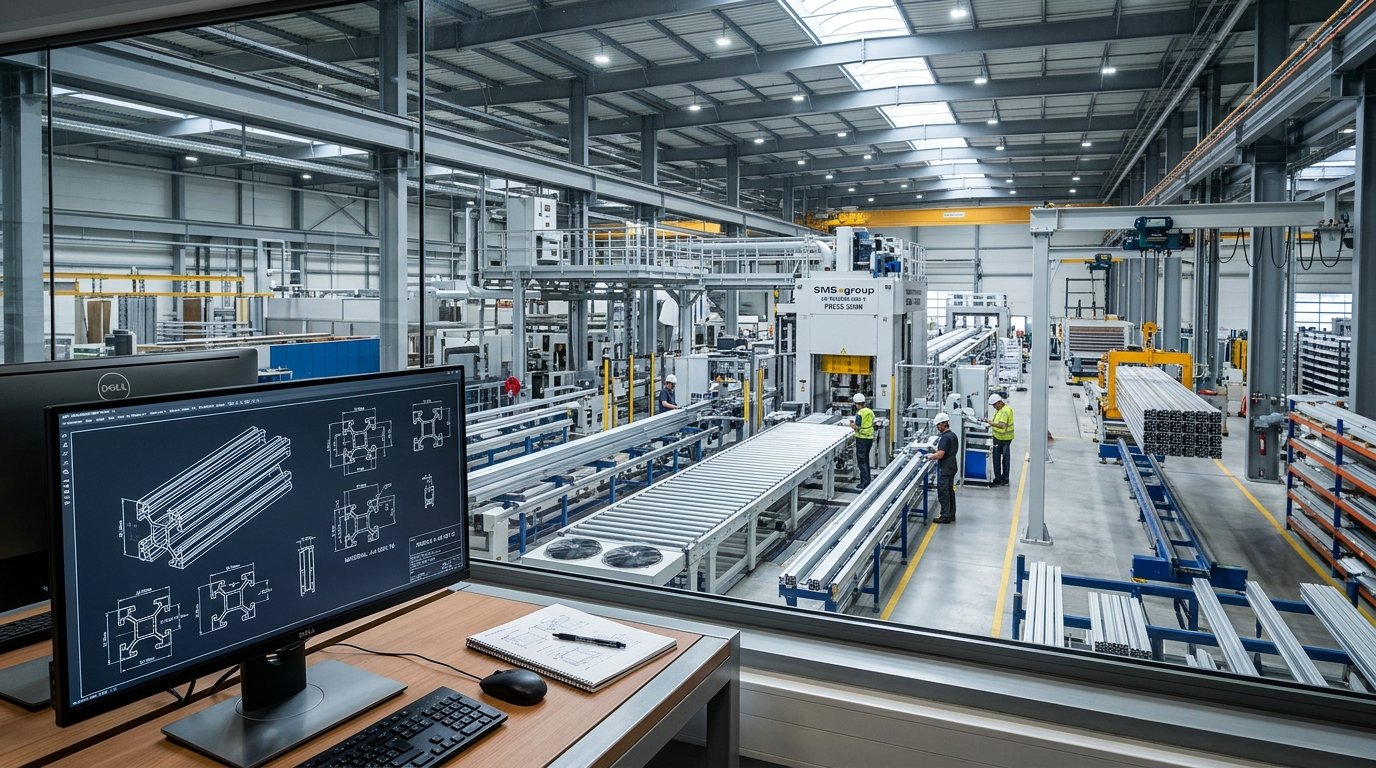
Plant, 5-6-7 Inch Presses & Small-Part Finishing
5-6-7 inch (1,000–2,000 t) presses, 80–20,000 g/m, min. 0.8 mm wall, bar/small-part anodizing & 8–6,000 mm cutting.
Read more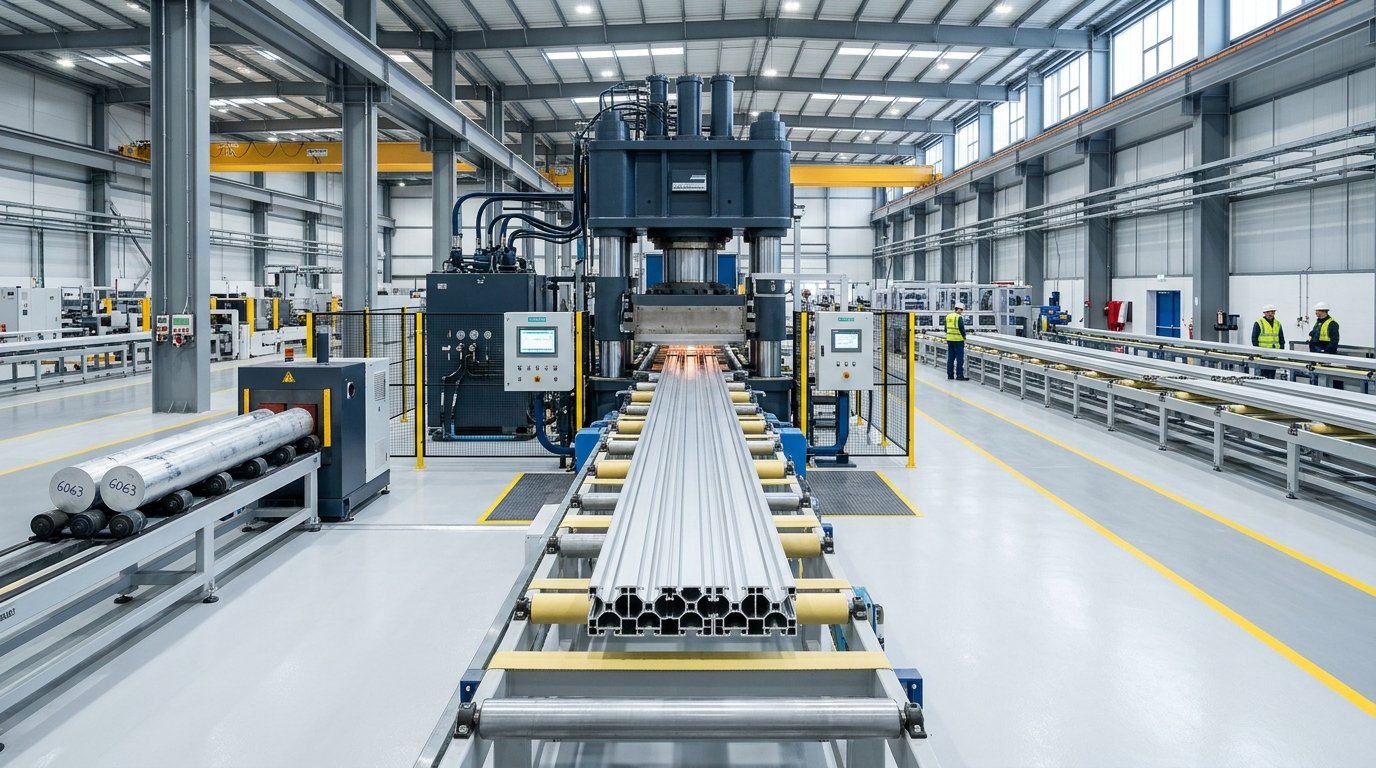
All Production Services (8 Integrated Units)
From custom dies and standard profiles to 5000-6000-7000 extrusion, small-part anodizing/coating and all-angle CNC.
Read more
Request a Quote
Send your section drawing and annual volume; the quotation is prepared together with the die and production plan.