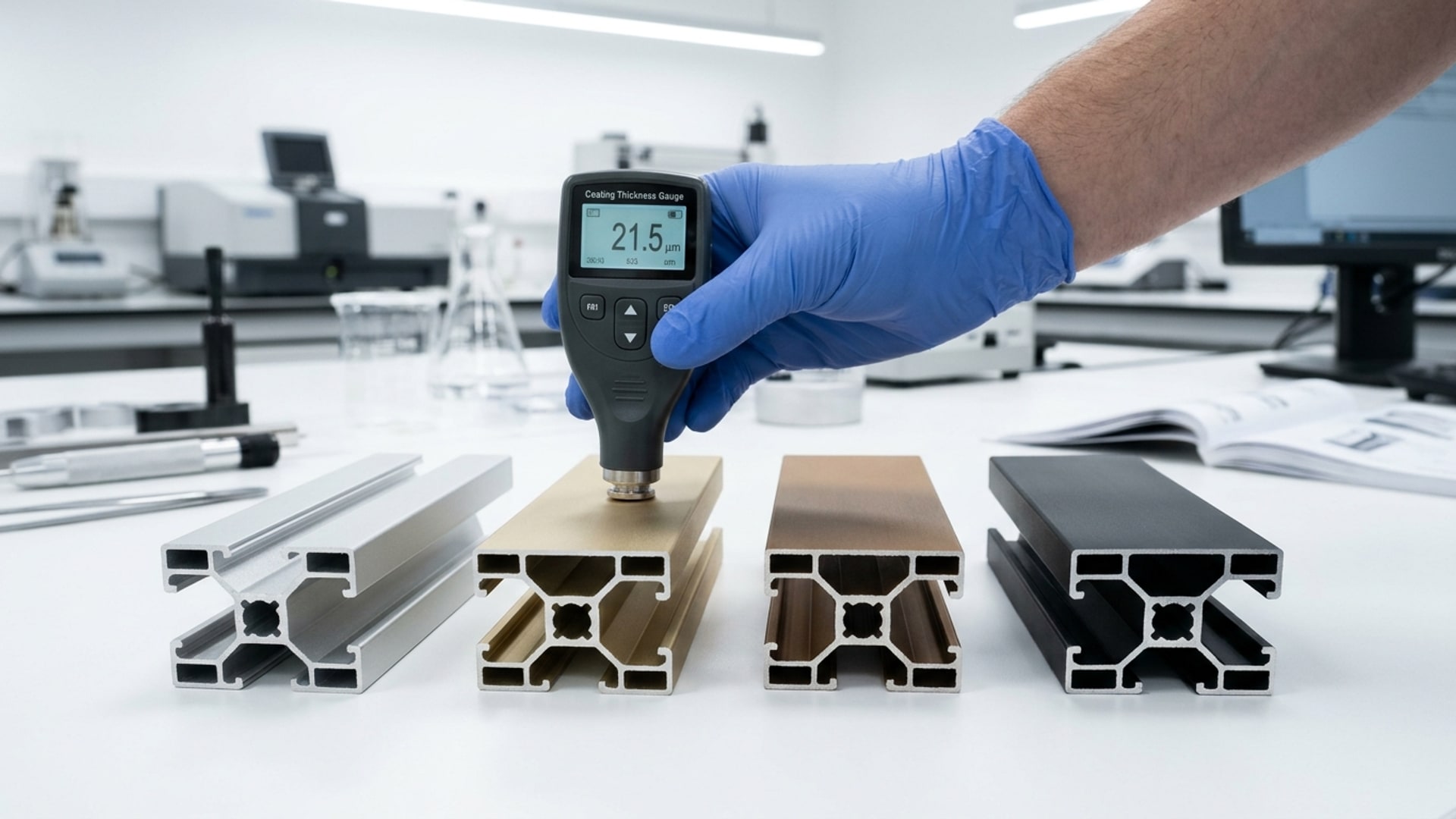
What is anodizing?
An electrolytically grown oxide layer on the aluminium surface provides corrosion and wear resistance.
Electrochemical Anodic Oxidation and Film Thickness Classes
In anodizing the profile is connected as the anode and direct current is applied in an acidic bath. The oxide layer grows from the metal itself instead of being added like paint, so it cannot peel off.
Layer thickness depends on the application class; on exterior facades, thicker layers improve resistance to weathering. Colour is applied by dyeing or electrolytic colouring and sealed afterwards.
Pre-treatment quality (degreasing, etching, rinsing) determines appearance and durability; standards such as DIN 17611 define these steps.
| Thickness Class | Micron Range (µm) | Recommended Service Environment |
|---|---|---|
| AA 10 (Standard Interior) | 10 – 12 µm | Interior trim, furniture handles, shower enclosures, heat sinks |
| AA 15 (Moderate Exterior) | 15 – 18 µm | General outdoor windows, doors, shading louvers and railings |
| AA 20 (Severe Exterior) | 20 – 24 µm | Urban/industrial facades and solar PV module frames |
| AA 25 (Marine / Aggressive) | ≥ 25 µm | Coastal architecture and high-salinity outdoor environments |
FAQ
Can an anodized layer peel or flake off like paint?
No. Anodizing converts the aluminium substrate itself into an integral crystalline Al₂O₃ oxide layer rather than depositing an external film, so it cannot peel or delaminate.
Which micron thickness class should be specified for interior vs. exterior use?
Per EN ISO 7599, 10–12 µm (AA10) suits interior architecture and furniture, 15–20 µm (AA15–AA20) is standard for outdoor facades/solar, and 20–25 µm (AA25) serves coastal environments.
Related Engineering & Manufacturing Resources

5000, 6000 & 7000 Series Alloys (EN 573-3 / EN 755-2)
Chemical composition and mechanical property tables for EN AW-5083, 5754, 6060, 6063, 6005A, 6082, 6463, 7020 and 7075.
Read more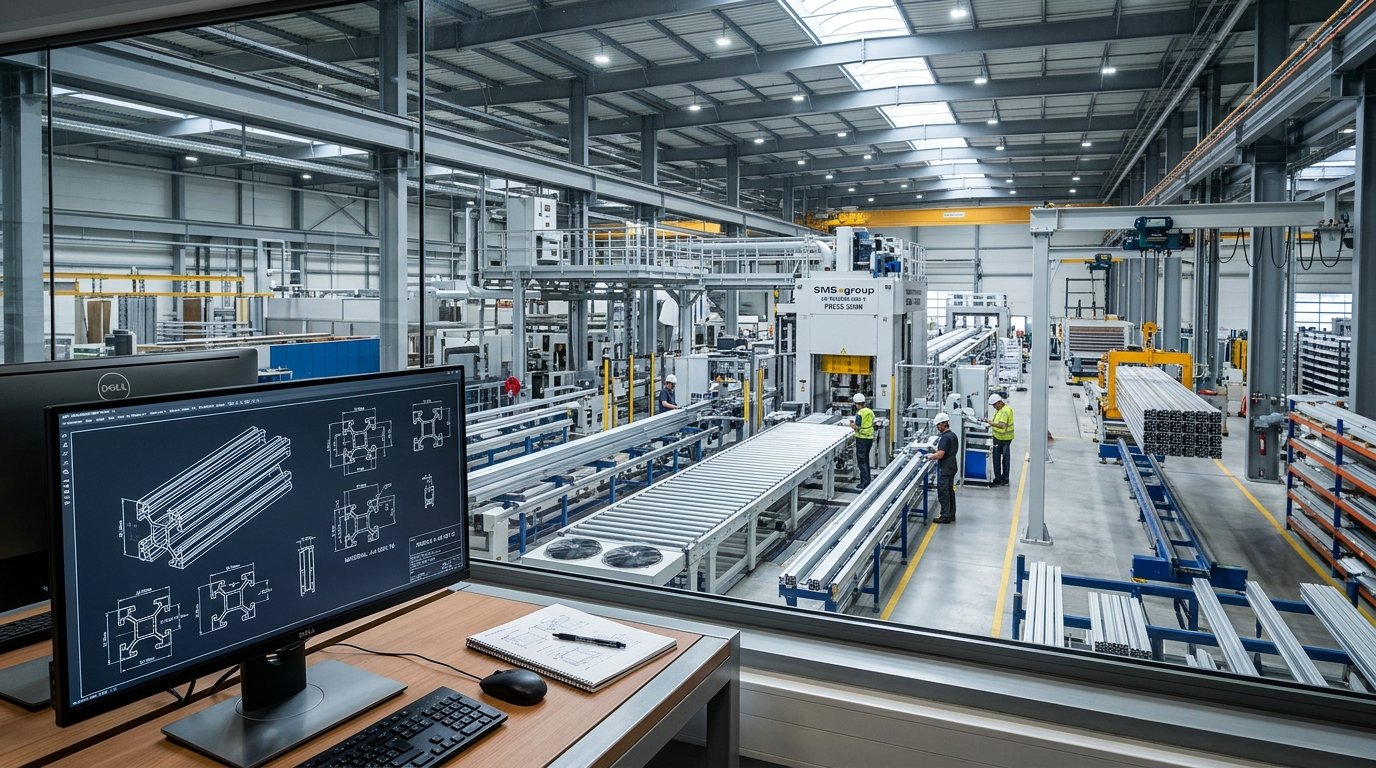
Plant, 5-6-7 Inch Presses & Small-Part Finishing
5-6-7 inch (1,000–2,000 t) presses, 80–20,000 g/m, min. 0.8 mm wall, bar/small-part anodizing & 8–6,000 mm cutting.
Read more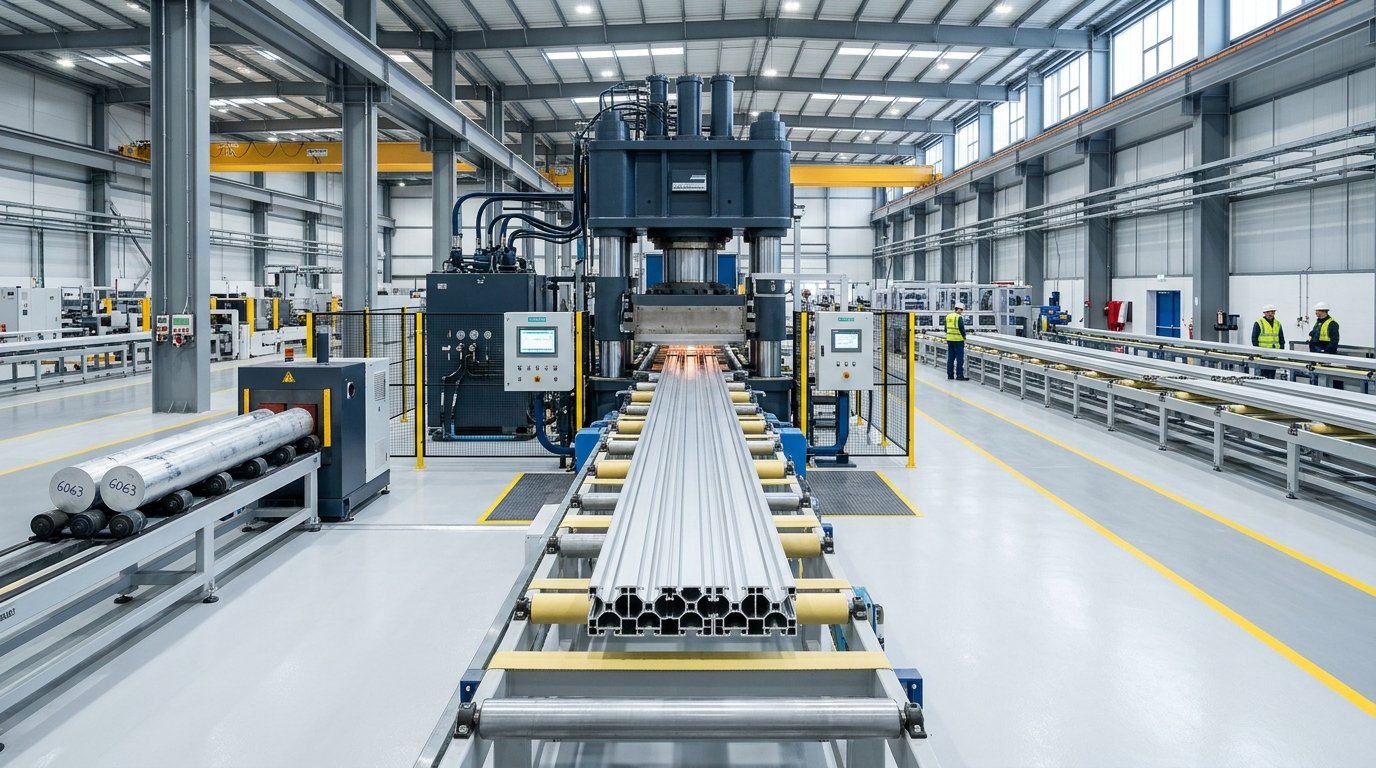
All Production Services (8 Integrated Units)
From custom dies and standard profiles to 5000-6000-7000 extrusion, small-part anodizing/coating and all-angle CNC.
Read more
Request a Quote
Send your section drawing and annual volume; the quotation is prepared together with the die and production plan.