
What is powder coating?
Electrostatically charged powder is applied to the profile and cured in an oven to form the coating.
Electrostatic Powder Coating Process Stages and Quality Controls
The powder is charged electrostatically by the spray gun and adheres to the grounded profile. It cures in the oven at around 180–200 °C to form a continuous film.
Film thickness is typically 60–80 µm and is verified by thickness and adhesion tests for architectural use. RAL colours and custom shades are available; metallic effects require dedicated powder systems.
Surface preparation matters as much as in anodizing: skipping degreasing and pre-treatment reduces adhesion and exterior durability.
| Process Stage | Control Parameter | Quality & Performance Impact |
|---|---|---|
| 1. Chemical Pre-Treatment | Degreasing + etching + conversion coat | Ensures cross-hatch adhesion and prevents filiform corrosion |
| 2. Drying Oven | Moisture removal (100 – 120 °C) | Prevents outgassing pinholes and surface blisters |
| 3. Electrostatic Spraying | Charged polyester powder (RAL) | Uniform wrap-around coverage across complex recesses |
| 4. Thermal Curing Oven | ~200 °C object temperature (10–15 min) | Cross-links polymer chains into a weather-resistant film |
| 5. Film Inspection | 60 – 80 µm (Micron & adhesion checks) | Guarantees UV stability, gloss uniformity and impact resistance |
FAQ
Why is multi-stage chemical pretreatment critical before powder coating?
Degreasing, acid etching and chrome-free conversion coating establish cross-hatch adhesion and block filiform under-film corrosion in outdoor architectural service.
When should powder coating be chosen over anodizing?
Choose powder coating when specific RAL architectural colors, fine-textured sablé finishes or high visual hiding power over welds and joints are required; choose anodizing for metallic hardness.
Related Engineering & Manufacturing Resources

5000, 6000 & 7000 Series Alloys (EN 573-3 / EN 755-2)
Chemical composition and mechanical property tables for EN AW-5083, 5754, 6060, 6063, 6005A, 6082, 6463, 7020 and 7075.
Read more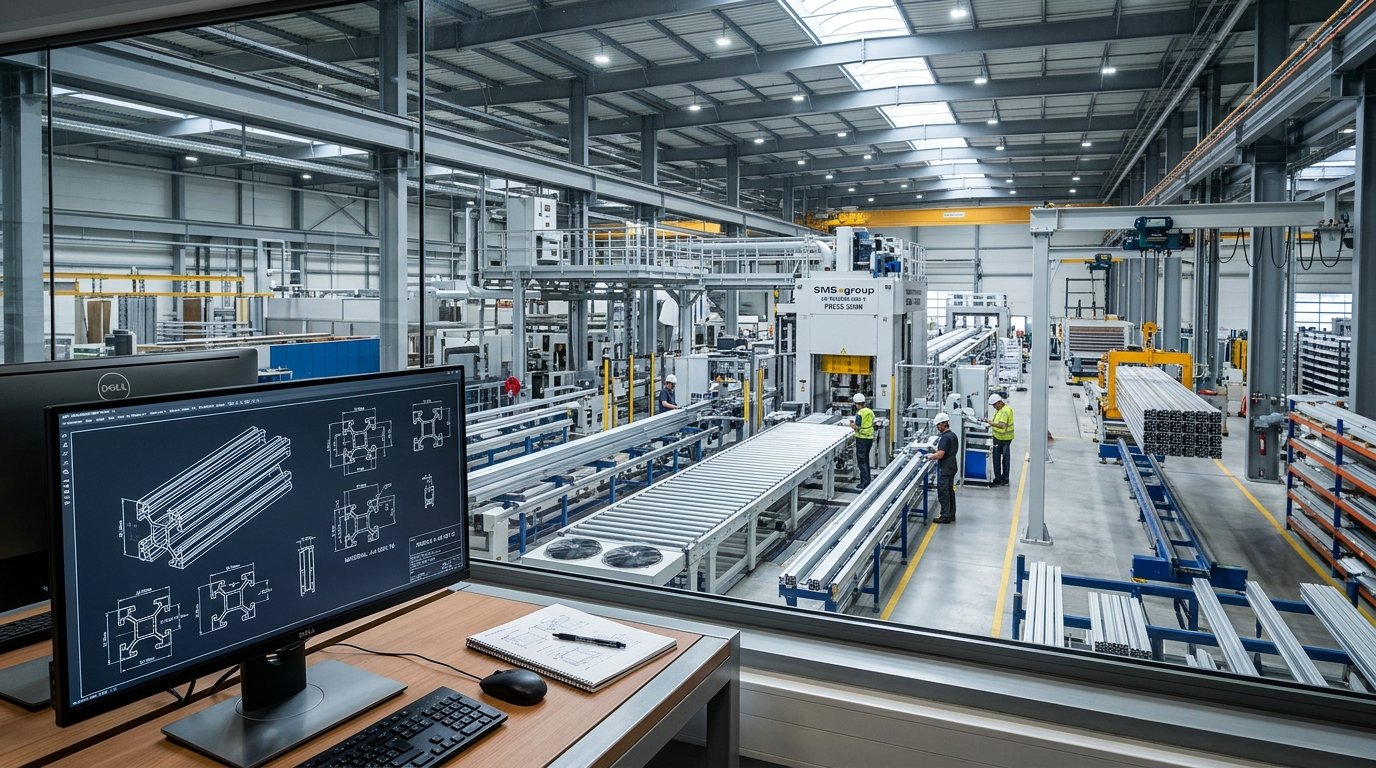
Plant, 5-6-7 Inch Presses & Small-Part Finishing
5-6-7 inch (1,000–2,000 t) presses, 80–20,000 g/m, min. 0.8 mm wall, bar/small-part anodizing & 8–6,000 mm cutting.
Read more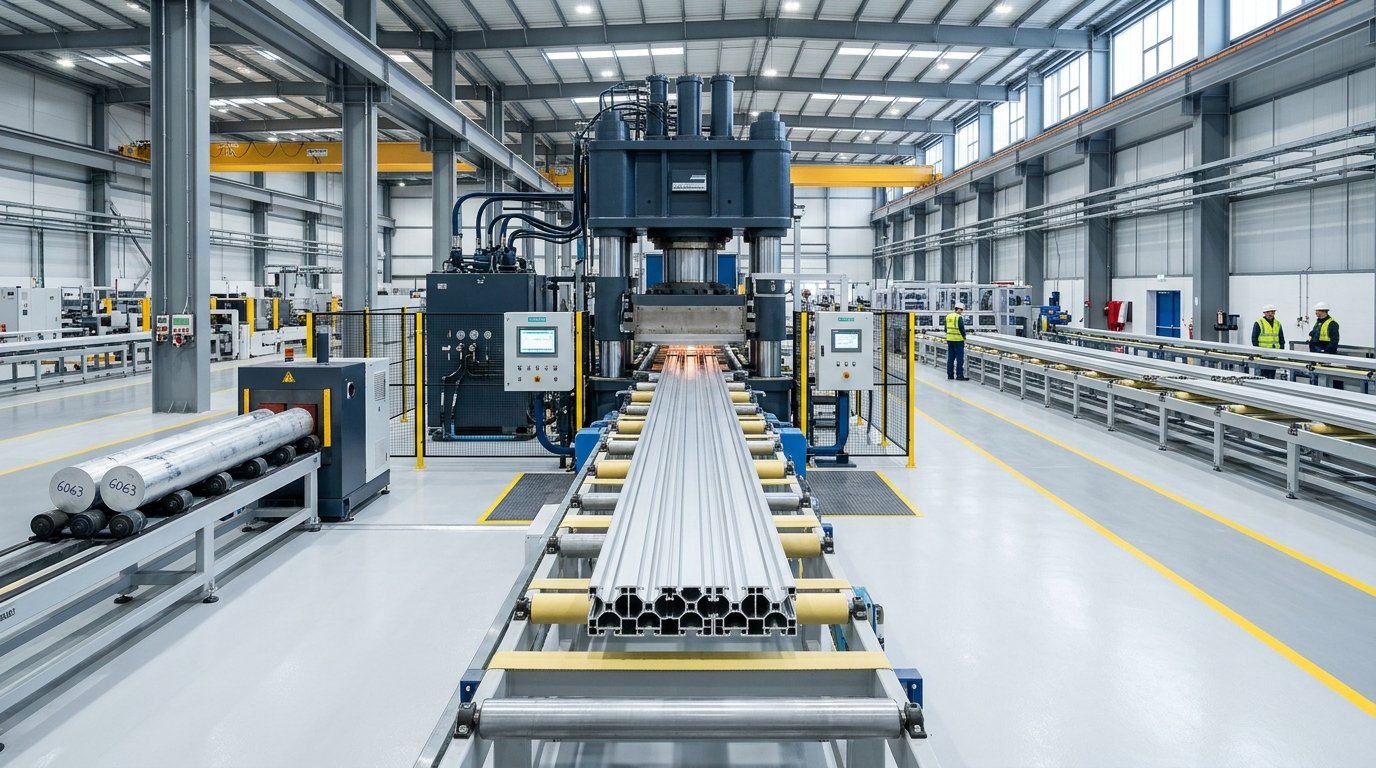
All Production Services (8 Integrated Units)
From custom dies and standard profiles to 5000-6000-7000 extrusion, small-part anodizing/coating and all-angle CNC.
Read more
Request a Quote
Send your section drawing and annual volume; the quotation is prepared together with the die and production plan.